Buying Your First Bouzouki: What Matters and What Doesn't
Buying a first bouzouki is harder than buying a first guitar, for one simple reason: the market is small, the good information is mostly in Greek, and the instrument you probably want — a trichordo, if rebetiko is what brought you here — is the minority of what's for sale. This guide collects what we know, with prices and sources, so you can spend your money once.
Trichordo or tetrachordo, decided honestly #
The four-course tetrachordo dominates the market so thoroughly that Europe's biggest online retailer stocks no trichorda at all. It was popularized by Manolis Chiotis in the 1950s, tunes like the top of a guitar, and is the right instrument for modern laiko and for guitarists who want their chord shapes to transfer — advice you'll find at teaching sites like BouzoukiSpace.
The three-course trichordo, tuned D-A-D, is the instrument of the classic rebetiko repertoire, and if that music is your goal, teachers who specialize in it, like the one behind Tapadum's buying guide, will tell you to start on it. So will we, with the bias declared: this whole site is built for trichordo. Every tab, every chord diagram, every lesson here fits your instrument from day one.
What a trichordo costs #
Real numbers, current as of mid-2026:
Entry-level, factory or small-workshop, new: roughly 500 to 650 euros from Greek retailers. Perfectly good instruments to learn on.
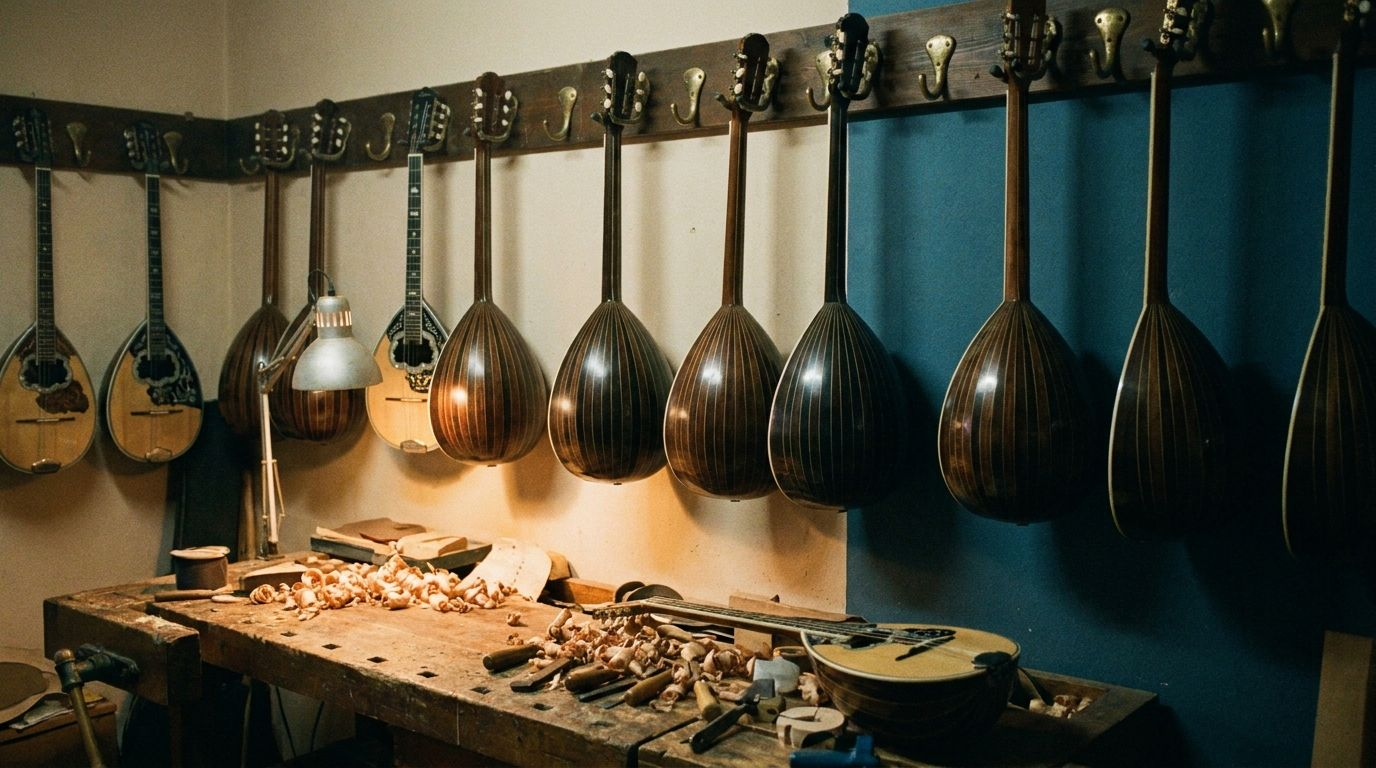
Handmade from an established workshop: Tsakirian in Athens, building since 1924, lists trichorda from about 1,000 to 3,000 euros, with most models around 1,600 to 1,800. A lifetime instrument.
In the US: Greek-made instruments start around 900 dollars at specialist shops like Astoria Music, and professional trichorda on the used market run into the low thousands.
The honest advice underneath the numbers: a decent starter instrument is enough, and the difference between a 550-euro and a 1,700-euro bouzouki matters far less than six months of practice on either. Nobody ever quit because their first instrument lacked mother-of-pearl. They quit because the strings were rusty and the action was painful — which brings us to what to actually check.
What to check before you pay #
The action, meaning string height over the frets. High action makes every note a fight and is the number-one reason beginners' hands hurt. Ask for it to be set up low; any competent shop will do this.
The neck, sighted from the tuners down toward the body: it should be straight, not bowed. On a long bouzouki neck, small warps become big problems.
Tuning stability. Tune it in the shop, play for ten minutes, check again. Cheap tuners that drift will poison your ear.
The bowl seams. On the round back, look along the strips (douyes) for gaps or lifting glue lines, especially on older instruments.
Fresh strings, or the price of a set knocked off. Standard trichordo sets (D'Addario EJ97-6 or the Greek-made equivalents) run .011/.014/.022w with the octave .011, and old strings hide an instrument's real voice.
Acoustic or electro-acoustic: if you dream of playing out, a pickup is cheaper installed at purchase. For home learning it is irrelevant.
Used instruments and family attics #
Greece is full of bouzoukia sleeping in closets, and a used instrument from a player is often the best value there is — with one caution: structural repairs (a lifting soundboard, a cracked bowl, a warped neck) cost real luthier money, easily more than the instrument. Cosmetic wear costs nothing and often means the thing was actually played, which is a good sign. If you inherit or are offered one, the checklist above still applies, plus one addition: count the tuners. Six means trichordo; eight means tetrachordo. People mix them up constantly, and now you won't.
After you buy #
Three things, in order. Put on fresh strings. Tune it — the free browser tuner has the trichordo D-A-D preset ready. And play something the same day, even one string, even badly, because an instrument that gets touched on day one gets touched on day one hundred. When you're ready for structure, the beginner's guide covers holding it, the pick, and your first practice routine, and the lessons take it from there.
Sources #
Tsakirian Bouzouki, Athens — current handmade prices
Astoria Music, New York — US market
Wikipedia, "Bouzouki" on the trichordo/tetrachordo history